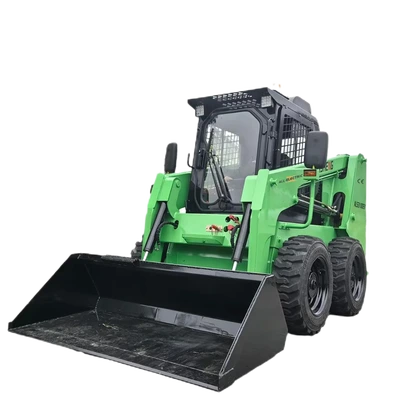
How Electric Skid Steer Loaders Reduce Operating Costs on Construction Sites
Managing operating costs is a major priority for construction companies of all sizes. Fuel expenses, equipment maintenance, labor requirements, and unexpected downtime can significantly affect project budgets. As construction technology continues to evolve, battery-powered machinery is becoming an alternative worth considering for businesses looking to improve operational efficiency.
An electric skid steer loader offers several potential cost advantages over conventional diesel-powered equipment. By using electric power instead of diesel fuel, an Electric Skid Steer Loader can help construction companies reduce certain recurring expenses while supporting quieter operations and reducing exhaust emissions at the job site. However, actual savings depend on the machine’s specifications, workload, electricity prices, and charging arrangements.
1. Lower Energy Costs Compared with Diesel Fuel
Fuel is one of the most noticeable recurring expenses associated with operating construction machinery. Diesel-powered skid steer loaders consume fuel throughout the working day, and fuel costs can fluctuate according to market conditions and local availability.
Electric skid steers use rechargeable batteries, allowing operators to power the machine with electricity. Depending on local electricity rates and the equipment’s energy consumption, charging may cost less per operating hour than purchasing diesel fuel.
Construction companies can estimate potential savings by comparing the energy consumption of each machine under similar working conditions. The calculation should include actual operating hours, fuel consumption, electricity prices, and charging losses.
2. Reduced Routine Maintenance Expenses
Traditional skid steer loaders contain combustion engines with components that require regular inspection, servicing, and replacement. Engine oil, oil filters, fuel filters, and other engine-related parts contribute to routine maintenance expenses.
Electric models do not require conventional engine oil changes or diesel fuel-system servicing. Their electric powertrains may therefore reduce certain maintenance tasks and associated labor costs.
However, electric equipment still requires regular servicing. Hydraulic systems, tires or tracks, lift arms, electrical connections, batteries, and safety components must be inspected according to the manufacturer’s recommendations.
3. Less Downtime from Engine-Related Servicing
Equipment downtime can delay construction activities, disrupt schedules, and increase labor costs. When a machine is unavailable, workers may need to wait, use alternative equipment, or adjust the project schedule.
Because electric skid steers have fewer conventional engine components, they can eliminate some maintenance-related interruptions associated with combustion engines. This can help improve equipment availability when the machine is properly maintained.
Charging time must also be included in downtime planning. Companies can reduce interruptions by scheduling charging during breaks, between shifts, or overnight, depending on battery capacity and site infrastructure.
4. Lower Costs in Indoor and Enclosed Work Areas
Some construction and renovation projects take place inside buildings, parking structures, warehouses, and other enclosed spaces. Diesel equipment used in these environments requires careful attention to exhaust emissions, ventilation, and applicable workplace safety regulations.
Battery-powered skid steers produce no exhaust emissions at the point of use during normal electric operation. Their generally lower operating noise can also make them suitable for certain noise-sensitive environments.
These characteristics may reduce the need for some exhaust-management measures associated with combustion equipment. Nevertheless, indoor operations still require appropriate ventilation, safe charging arrangements, and compliance with site-specific requirements.
5. Reduced Noise-Related Disruptions
Noise can affect workers, nearby residents, businesses, and other construction activities. Projects in residential neighborhoods or near occupied buildings may face restrictions on working hours or equipment noise.
Electric skid steers generally operate more quietly than comparable diesel machines because they do not rely on a combustion engine. This can improve communication between workers and reduce noise-related disruption during suitable applications.
The actual noise level depends on the machine, hydraulic activity, tires or tracks, attachments, and surrounding conditions. Electric equipment is not silent, so construction companies should still follow applicable noise limits and hearing-protection requirements.
6. Improved Efficiency in Material Handling
Skid steer loaders are designed to perform multiple tasks in compact working areas. With compatible attachments, they can move soil, transport construction materials, clear debris, and assist with site preparation.
Using one machine for several tasks can reduce the need to purchase, rent, or transport additional equipment. This advantage is not exclusive to electric models, but it can contribute to the overall financial value of an electric skid steer when its performance matches the site’s requirements.
Before selecting a machine, construction managers should evaluate rated operating capacity, lift height, hydraulic performance, maneuverability, and attachment compatibility. Choosing an undersized or unsuitable loader may increase operating time and reduce the expected savings.
7. Potential Savings on Fuel Storage and Handling
Construction sites that rely on diesel machinery may need arrangements for fuel delivery, storage, handling, and inventory management. These activities can involve administrative work, equipment, and additional safety procedures.
Electric skid steers replace routine diesel refueling with battery charging. Where suitable electrical infrastructure is already available, this may simplify certain aspects of energy management and reduce dependence on regular fuel deliveries.
However, charging requires a reliable power supply and compatible equipment. Sites without adequate electrical capacity may need to invest in charging infrastructure or make other arrangements, increasing initial costs.
8. How Electric Skid Steers Affect Total Cost of Ownership
Purchase price alone does not determine whether a construction machine is economical. Total cost of ownership includes the expenses associated with purchasing, operating, maintaining, and eventually replacing the equipment.
Construction companies should evaluate the following factors:
- Initial purchase price: Compare the upfront cost of electric and diesel models with similar operating capabilities.
- Energy expenses: Estimate electricity consumption and diesel use per operating hour.
- Maintenance costs: Include scheduled servicing, replacement parts, labor, and expected repairs.
- Battery expenses: Consider battery warranty coverage, expected service life, and potential replacement costs.
- Charging infrastructure: Account for installation, electrical upgrades, and charging equipment where necessary.
- Equipment utilization: Assess how many hours the machine will operate and whether charging can fit into the work schedule.
- Resale value: Consider expected market demand and the machine’s condition at the end of ownership.
A comprehensive comparison helps businesses determine whether lower recurring expenses can compensate for a potentially higher initial investment.
9. A Simple Example of Potential Operating Cost Savings
Consider a hypothetical construction company comparing an electric skid steer with a diesel model. The following figures illustrate how energy costs can affect operating expenses; they are examples rather than specifications or guaranteed savings for any particular machine.
Assume the diesel model consumes 5 liters of fuel per hour, diesel costs $1.20 per liter, and the electric model consumes 8 kWh per hour at an electricity rate of $0.15 per kWh.
| Cost factor | Diesel skid steer | Electric skid steer |
|---|---|---|
| Energy consumption per hour | 5 liters | 8 kWh |
| Energy price | $1.20 per liter | $0.15 per kWh |
| Energy cost per hour | $6.00 | $1.20 |
| Energy cost for 1,000 hours | $6,000 | $1,200 |
Under these assumptions, the electric model saves $4.80 per operating hour in energy costs, or $4,800 over 1,000 operating hours.
This calculation excludes charging losses, maintenance, purchase price differences, infrastructure, battery replacement, and other ownership expenses. Actual results may vary considerably depending on the machines and working conditions being compared.
10. Practical Ways to Maximize Cost Savings
Construction companies can improve the financial performance of electric skid steers by planning equipment use carefully.
Match the Machine to the Job
Choose a loader with sufficient lifting capacity and hydraulic performance without paying for capabilities the project does not need. Appropriate machine sizing can help control energy consumption and improve productivity.
Plan Charging Around Work Schedules
Whenever possible, charge the machine during periods when it would otherwise be idle. Review battery capacity and charging time to determine whether the equipment can meet daily requirements without interrupting essential tasks.
Follow Preventive Maintenance Schedules
Regular inspections can identify tire wear, hydraulic leaks, damaged connectors, and other issues before they lead to expensive repairs. Battery and charging-system maintenance should follow the manufacturer’s instructions.
Track Operating Costs
Record energy consumption, maintenance expenses, operating hours, charging time, and downtime. Comparing these figures with those of existing diesel equipment provides a clearer picture of actual savings.
Evaluate Site Infrastructure Before Purchasing
Confirm that the construction site has suitable electrical capacity and charging access. Identifying infrastructure requirements early can prevent unexpected installation expenses and operational delays.
11. When Is an Electric Skid Steer the Most Cost-Effective Choice?
Electric skid steers may offer the greatest financial advantages on projects with predictable work schedules, regular access to charging, and significant daily operating hours. Indoor construction, building renovation, urban projects, and noise-sensitive sites may benefit from their reduced exhaust emissions and quieter operation.
Diesel equipment may remain more practical for remote construction sites, continuous heavy-duty operations, or locations where charging access is limited. In these situations, refueling speed and established fuel infrastructure can outweigh some of the operating advantages of electric machinery.
The best choice depends on the project’s energy costs, operating conditions, productivity requirements, and expected equipment lifespan.
Conclusion
Electric skid steer loaders can help construction companies control operating costs through potentially lower energy expenses, reduced engine-related maintenance, quieter operation, and less dependence on diesel fuel logistics. Their financial benefits are particularly relevant when the equipment operates regularly in environments with reliable charging access.
However, savings should never be assumed based on energy costs alone. Purchase price, battery life, charging infrastructure, maintenance, productivity, and resale value all influence the final result. By comparing these factors and tracking real operating data, construction businesses can make informed equipment decisions that support both budget management and long-term efficiency.