Fire extinguishers are essential components of workplace, commercial, and residential fire protection systems. Their effectiveness depends not only on the extinguishing agent inside the cylinder but also on the components that control its discharge. The nozzle is particularly important because it directs the extinguishing material toward the fire and helps determine how it is distributed. Selecting the correct design can improve handling, discharge control, and overall equipment performance.
An Extinguisher Nozzle is the outlet component through which an extinguisher releases its contents. Depending on the extinguisher type, it may deliver water, foam, dry chemical powder, carbon dioxide, or another approved extinguishing agent. Nozzles are designed to suit specific agents and operating conditions, so their shape, material, and discharge characteristics must match the equipment manufacturer’s specifications.
What Is the Function of an Extinguisher Nozzle?
The main function of an extinguisher nozzle is to direct the extinguishing agent toward the intended area. It provides a controlled outlet that helps users aim the discharge while maintaining the flow characteristics required by the extinguisher.
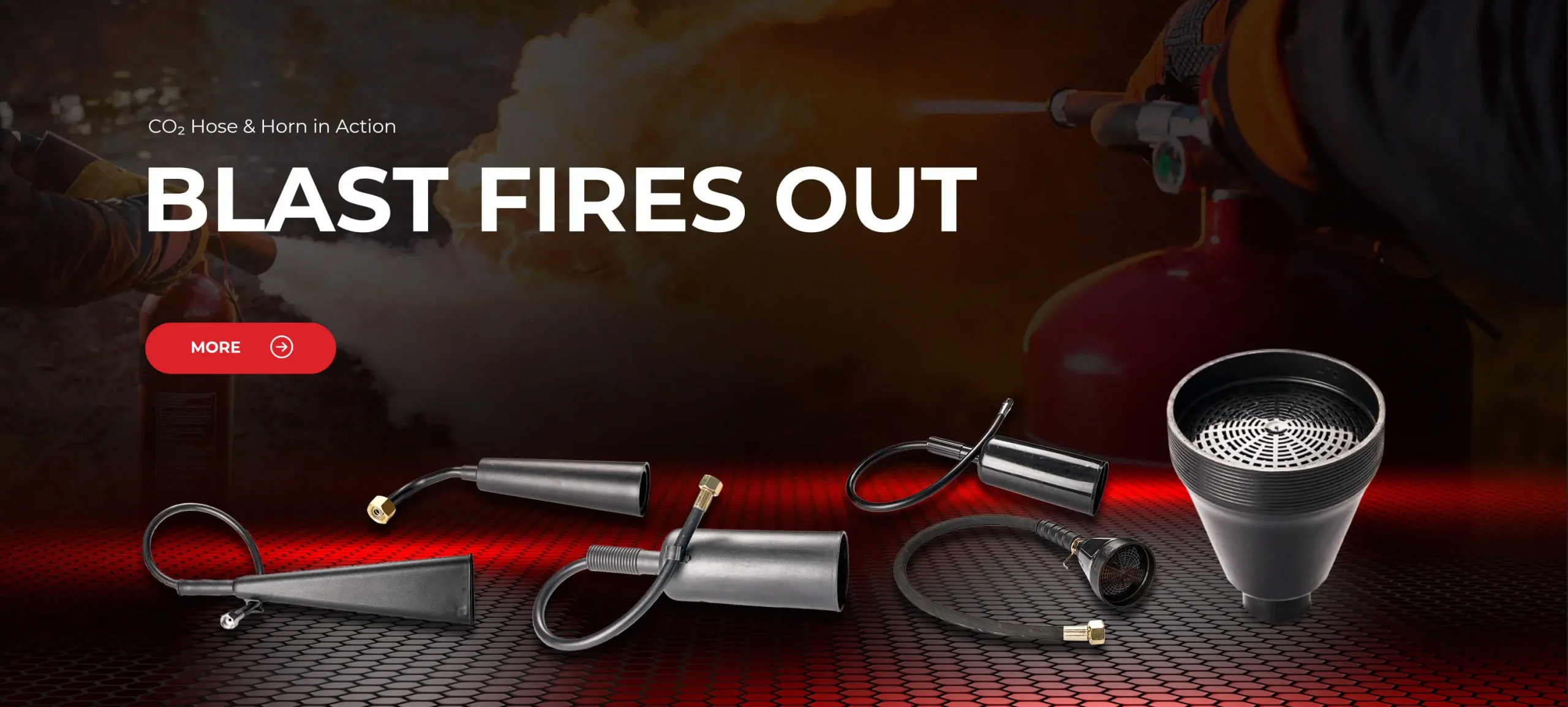
Different extinguishing agents require different discharge arrangements. A water extinguisher may use a nozzle designed to produce a suitable stream or spray, while a dry powder extinguisher requires an outlet that allows powder to flow without unnecessary obstruction. Carbon dioxide extinguishers use specially designed discharge horns to manage the release of gas and extremely cold discharge material.
A compatible nozzle supports effective operation, whereas an unsuitable or damaged component may interfere with discharge and reduce equipment reliability.
Common Types of Extinguisher Nozzles
Nozzle designs vary according to extinguisher type, extinguishing agent, and manufacturer requirements.
1. Water Extinguisher Nozzles
Water extinguisher nozzles are designed to direct water toward fires involving suitable ordinary combustible materials. Depending on the model, they may produce a concentrated stream or a controlled spray pattern. Their construction must support the specified water flow and operating pressure.
2. Foam Extinguisher Nozzles
Foam extinguishers use discharge arrangements designed to deliver foam effectively. The nozzle helps distribute the agent across the burning surface, where an appropriate foam blanket can help separate fuel from oxygen and reduce the release of flammable vapors. Compatibility with the foam formulation is essential.
3. Dry Powder Extinguisher Nozzles
Dry powder nozzles are designed to discharge extinguishing powder in a controlled pattern. Their outlet dimensions and internal passages must allow the powder to flow correctly. Blockages, moisture, or incompatible replacement parts can affect discharge performance.
4. Carbon Dioxide Extinguisher Horns
Carbon dioxide extinguishers commonly use a horn-shaped discharge component rather than a conventional narrow nozzle. It directs the gas toward the fire while helping users maintain an appropriate distance. These components become extremely cold during discharge, so users should avoid touching the discharge horn unless its design specifically permits safe handling.
5. Specialized Extinguisher Outlets
Some extinguishers use specialized discharge components for particular agents or applications. These may include shaped outlets, flexible hoses, or manufacturer-specific assemblies. Replacement components must be approved for the exact extinguisher model.
Important Material and Design Considerations
Extinguisher nozzles may be manufactured from metal, reinforced polymers, or other materials selected for their intended operating conditions. Material choice influences strength, weight, corrosion resistance, and durability.
Metal components can offer mechanical strength, while suitable polymers may provide reduced weight and resistance to certain environmental conditions. However, no material should be considered appropriate solely because it is lightweight or corrosion-resistant. It must meet the pressure, temperature, chemical compatibility, and performance requirements of the extinguisher.
Design also affects usability. The outlet should provide suitable flow control, remain securely connected, and withstand normal handling without cracking or deforming.
How to Select the Right Extinguisher Nozzle
Choosing a suitable nozzle requires attention to the extinguisher’s design and intended use. Important factors include:
- Extinguisher type: Identify whether the unit uses water, foam, powder, carbon dioxide, or another agent.
- Compatibility: Confirm that the nozzle is approved for the specific extinguisher model and discharge system.
- Pressure rating: Ensure the component meets the manufacturer’s specified operating requirements.
- Discharge pattern: Consider the outlet design required to deliver the extinguishing agent correctly.
- Material quality: Evaluate resistance to impact, corrosion, temperature changes, and relevant chemicals.
- Connection design: Check thread dimensions, fittings, and sealing arrangements to prevent leakage or accidental separation.
- Regulatory compliance: Select components that meet applicable fire safety standards and manufacturer requirements.
Using generic or improvised replacement parts can compromise extinguisher performance and should be avoided.
Maintenance and Inspection Requirements
Regular inspection helps keep extinguisher nozzles in serviceable condition. Personnel should check for cracks, deformation, corrosion, loose connections, blockages, and signs of leakage. Flexible discharge hoses should also be examined for wear or deterioration.
Dust and other deposits should be removed using cleaning methods approved by the manufacturer. Avoid inserting sharp objects into outlet passages, as this may damage internal surfaces or change the discharge characteristics.
Nozzles that are damaged, obstructed, or incompatible with the extinguisher should be assessed by qualified service technicians. Maintenance records should document inspections, repairs, and replacement activities.
Safe Use and Workplace Preparedness
Employees should receive appropriate fire safety training so they understand how to operate the extinguisher supplied for their workplace. They must know how to remove the safety pin, aim the discharge component, operate the handle, and maintain a safe escape route.
Extinguishers must only be used on fires for which their agent is suitable. If a fire spreads, produces heavy smoke, or threatens evacuation routes, occupants should leave immediately and contact emergency services.
Conclusion
Extinguisher nozzles play an important role in directing and controlling the release of firefighting agents. Their effectiveness depends on suitable design, material quality, correct compatibility, and regular inspection. By following manufacturer specifications and maintaining approved components, organizations can help ensure that fire extinguishers remain reliable and ready for appropriate emergency use.