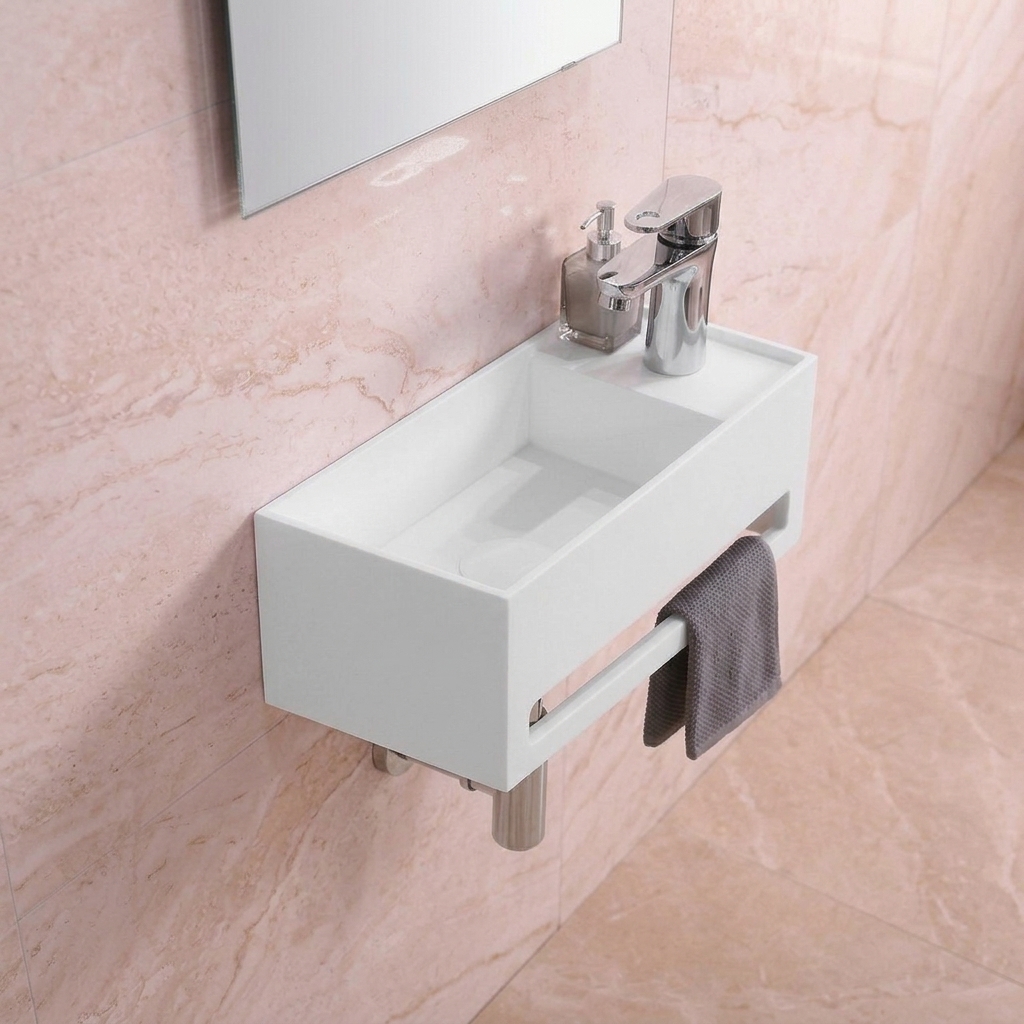
A faucet may look like a minor bathroom fitting, yet its size and position have a major effect on how a washbasin works. The wrong tap can cause water to splash onto the countertop, leave too little room for handwashing, or make a compact bathroom look crowded. A well-matched faucet keeps the washing area comfortable and helps the basin function as intended.
When choosing a faucet for a small wash basin, the main concern is compatibility rather than appearance alone. The spout height, reach, water flow, mounting style, and handle position all need to match the bowl’s dimensions. Even a stylish faucet may become inconvenient when its proportions do not suit the basin.
1. Start With the Basin Dimensions
Before looking at faucet styles, measure the basin and identify its mounting arrangement. A compact bowl offers less room for water to land and less space for hand movement, so small differences in faucet dimensions can affect everyday use.
Focus on three measurements:
- Basin depth: The distance from the rim to the lowest point inside the bowl.
- Basin width: The available space across the washing area.
- Basin projection: How far the fixture extends from the wall or mounting surface.
These measurements help determine the appropriate faucet height and spout reach. Check the manufacturer’s technical drawings rather than estimating dimensions from product photographs.
2. Choose a Suitable Spout Height
Spout height refers to the vertical distance between the faucet’s mounting surface and the water outlet. It determines how much space users have to place their hands beneath the running water.
A faucet that sits too low can make handwashing uncomfortable. Users may struggle to fit their hands under the spout, especially when the basin has a relatively deep bowl.
A very tall faucet can create a different problem. Water may fall from a greater height and strike the bowl with more force, increasing splashing.
Low-Profile Faucets
Low-profile faucets have a shorter body and suit many compact basins. They work particularly well when the bowl has a shallow design and the faucet mounts close to its rear edge.
Their restrained height also helps maintain a balanced appearance in small bathrooms. However, check that the spout still leaves enough room for comfortable handwashing.
Medium-Height Faucets
Medium-height models provide more clearance without taking up excessive visual space. They can suit basins with moderate bowl depth and offer a practical option for everyday residential use.
The correct height depends on the distance between the mounting surface and the basin’s bottom. Compare the full measurements before selecting a model.
Tall Faucets
Tall faucets often pair with vessel basins that sit above a countertop. Their extra height allows the spout to reach over the raised bowl.
They are not automatically suitable for every compact basin. A tall tap above a shallow or narrow bowl may cause splashing and look disproportionate.
3. Check the Spout Reach
Spout reach measures the horizontal distance from the faucet body to the point where water exits. This measurement determines where the water stream lands inside the bowl.
A spout that is too short may direct water close to the rear wall. This can make handwashing awkward and leave water marks around the back of the basin.
An overly long spout may send water too close to the front edge. It can also reduce the usable space around the basin.
Ideally, the water stream should land near the center of the washing area or slightly behind it, depending on the bowl’s shape. This position helps users wash their hands comfortably while reducing splashing.
4. Match the Faucet to the Mounting Style
The basin’s design determines which faucet installation options are available. Some models include pre-drilled tap holes, whereas others require a separate countertop or wall-mounted fitting.
Deck-Mounted Faucets
Deck-mounted faucets attach directly to the basin or countertop. They are common in residential bathrooms and offer a straightforward installation arrangement.
Before buying one, check the number and position of the mounting holes. A single-hole faucet may suit a compact basin with limited space, while a three-hole design requires more room.
Also check the countertop thickness and the clearance underneath for mounting hardware and water connections.
Wall-Mounted Faucets
Wall-mounted faucets attach to the wall above the basin. They keep the countertop clear and can create a clean appearance in narrow bathrooms.
Their position requires careful planning. The spout must extend far enough to direct water into the bowl without placing the stream too close to the rear edge.
Wall-mounted models also require water supply pipes inside the wall. It is easier to plan this arrangement during renovation or new construction than after the wall finishes are complete.
Basin-Mounted Faucets
Some basins come with dedicated tap holes or specific mounting arrangements. These models can simplify selection because the faucet position is already part of the basin design.
However, buyers should still confirm compatibility with the selected tap. Check the hole diameter, number of holes, and available space for the handles.
5. Select a Faucet Type That Suits Everyday Use
Faucet operation affects convenience as much as its dimensions. The right mechanism depends on who will use the bathroom and how much control users need over water temperature and flow.
Single-Handle Faucets
Single-handle faucets control hot and cold water through one lever. Users can adjust temperature and flow without operating separate handles.
Their compact design makes them useful for small bathrooms where space around the tap is limited. They also offer simple operation for everyday handwashing.
Two-Handle Faucets
Two-handle faucets have separate controls for hot and cold water. They offer independent adjustment and suit traditional bathroom designs.
However, they need additional space around the faucet body. Check that the handles do not extend beyond the available mounting area or interfere with nearby walls.
Touchless Faucets
Touchless faucets use a sensor to activate water flow when someone places their hands beneath the spout. They can reduce direct contact with the tap and may suit shared bathrooms.
These models need a power source, such as batteries or a mains connection. Their sensors also require suitable positioning to prevent accidental activation.
For a private residential bathroom, a touchless model may add unnecessary cost. In public or commercial facilities, the reduced contact may make it worth considering.
6. Consider Water Flow and Splash Control
A faucet needs to deliver enough water for comfortable handwashing without overwhelming the bowl. Excessive flow can create splashing, especially when the basin is shallow or narrow.
Look for a model with a controlled flow rate and an aerator where appropriate. An aerator mixes air into the water stream, helping create a softer flow while reducing water consumption in many faucet designs.
However, an aerator cannot correct every compatibility problem. The spout angle and distance from the bowl still matter.
Before finalizing the choice, consider:
- Whether the water stream reaches the bowl’s usable center
- Whether the flow rate suits the basin’s depth
- Whether the faucet supports the property’s water pressure
- Whether the aerator can be cleaned or replaced
- Whether the tap provides comfortable temperature control
A properly matched faucet helps keep the surrounding countertop and floor drier during normal use.
7. Pick a Finish That Matches the Bathroom
The faucet finish influences the overall appearance of the washroom. It should coordinate with the basin, cabinet hardware, shower fittings, and other visible details.
Common options include:
| Faucet Finish | Appearance | Maintenance Consideration |
| Chrome | Bright and reflective | Water spots and fingerprints may show |
| Brushed nickel | Soft metallic appearance | Often hides minor marks better than polished finishes |
| Matte black | Dark and contemporary | Requires suitable cleaning to avoid surface damage |
| Brushed brass | Warm and decorative | Care instructions depend on the coating |
| Polished brass | Bright and traditional | May need regular wiping to maintain its appearance |
Do not choose a finish based on color alone. Coating quality and resistance to corrosion also matter, particularly in bathrooms with regular moisture exposure.
8. Check Material Quality and Plumbing Compatibility
The internal construction of a faucet affects its reliability. Brass bodies are common in quality bathroom fittings because they provide a durable base for water connections. Other materials and finishes may also suit particular budgets and designs.
Pay attention to the cartridge, which controls water flow and temperature. Ceramic disc cartridges are common in modern faucets and help provide smooth operation when manufactured to suitable standards.
The plumbing connections must also match the existing installation. Check the inlet hose sizes, hot and cold water positions, and available shutoff valves.
For a renovation project, confirm these details before purchasing. A faucet that requires extensive pipe changes may increase the installation cost beyond the original budget.
9. Common Faucet Selection Mistakes
Even a good-quality faucet may perform poorly when it does not suit the basin. Avoid these common errors during selection.
Choosing a Tall Faucet Without Checking Bowl Depth
A tall spout above a shallow basin can create excessive splashing. Compare the spout height with the bowl depth before buying.
Ignoring Spout Reach
A faucet may fit the mounting hole but still direct water toward the wrong part of the bowl. Check where the stream will land.
Selecting a Faucet That Is Too Wide
Large handles and broad faucet bodies can overwhelm a compact basin. Measure the available mounting area and leave enough room for comfortable operation.
Overlooking Installation Requirements
Wall-mounted and deck-mounted models require different plumbing arrangements. Confirm that the chosen type suits the existing water supply and basin design.
Prioritizing Appearance Over Function
A decorative faucet may look attractive but prove inconvenient during daily use. Consider operation, water flow, cleaning, and replacement parts alongside its finish.
10. A Simple Checklist Before Purchasing
Use this checklist to compare faucet options before making a final decision:
- Measure the basin width, depth, and projection.
- Check the faucet’s spout height and horizontal reach.
- Confirm the mounting style and tap-hole arrangement.
- Make sure the handles have enough operating space.
- Check water pressure and connection requirements.
- Compare the finish with other bathroom fittings.
- Review cartridge quality and warranty details.
- Confirm that replacement parts are available.
Product dimensions and technical specifications from suppliers such as kingkonree can help buyers compare basin designs before selecting compatible fittings. Reviewing both products together makes it easier to avoid installation problems.
Final Thoughts
The right faucet for a compact basin should provide comfortable handwashing without causing excessive splashing or taking up unnecessary space. Spout height, reach, mounting style, water flow, and handle design all influence how well the two fixtures work together.
Start with the basin measurements and then compare faucet specifications. A balanced combination will make better use of the available space, support everyday convenience, and give the bathroom a consistent appearance.