Thermal printing technology has become an essential part of modern business operations, supporting activities such as receipt generation, product labeling, shipping documentation, and inventory management. Different industries have different printing requirements, which has encouraged the development of thermal printers in various sizes, configurations, and performance levels. From compact desktop devices used in retail stores to heavy-duty industrial machines designed for continuous production, each type serves a specific purpose.
Understanding the different types of thermal printers helps businesses identify equipment that matches their printing volume, working environment, and application requirements. Factors such as printing method, resolution, connectivity, media compatibility, and portability all influence the selection process. Exploring the available Thermal Printer options can help organizations understand how different printing solutions support their daily operations.
Understanding Thermal Printers
A thermal printer is a printing device that uses heat to produce text, graphics, barcodes, and other information on compatible materials. Unlike conventional inkjet and laser printers, thermal printing technology does not depend on traditional ink cartridges or toner.
The printer uses a thermal printhead containing small heating elements. These elements activate specific areas of the printing material to create the required image.
Thermal printers generally operate through two main technologies: direct thermal printing and thermal transfer printing. Both use heat, but their printing materials and applications differ.
Direct thermal printers create images on specially coated heat-sensitive paper, while thermal transfer printers use a heated ribbon to transfer ink onto labels or other surfaces.
1. Direct Thermal Printers
<AsyncImage query=”desktop direct thermal receipt printer printing paper roll” aspectRatio=”16:9″ width=”100%”/>
Direct thermal printers use heat-sensitive paper that changes color when exposed to controlled temperatures. The printhead heats selected areas of the paper to create text, images, and barcodes.
These printers do not require ink cartridges, toner, or thermal transfer ribbons, making their operation relatively straightforward.
Practical Applications
- Retail receipts: Stores use direct thermal printers to generate customer receipts and transaction records.
- Shipping labels: Delivery companies use them for labels that do not require extended environmental durability.
- Queue tickets: Banks, hospitals, and service centers print waiting numbers and appointment tickets.
- Food service: Restaurants use them to produce order tickets and transaction slips.
- Temporary identification: Businesses use them for short-term product and package identification.
Key Advantages
Direct thermal printers are easy to operate and require fewer consumables. Their simple printing mechanism makes them suitable for environments where speed and convenience are important.
However, direct thermal prints can fade when exposed to sunlight, excessive heat, friction, or certain chemicals. They are therefore less suitable for applications requiring long-term label durability.
2. Thermal Transfer Printers
<AsyncImage query=”thermal transfer barcode label printer with ribbon industrial printing labels” aspectRatio=”16:9″ width=”100%”/>
Thermal transfer printers use heat to transfer ink from a ribbon onto a label or other compatible material. The printhead heats selected areas of the ribbon, allowing the ink to bond with the printing surface.
Different ribbon formulations, including wax, wax-resin, and resin, support different durability requirements.
Practical Applications
- Product labeling: Manufacturers use thermal transfer printers to create product identification labels.
- Warehouse management: Businesses print durable barcode labels for shelves, cartons, and inventory items.
- Asset tracking: Organizations label equipment and other valuable assets for identification.
- Chemical labeling: Suitable material and ribbon combinations can produce labels designed for demanding environments.
- Manufacturing operations: Production facilities use them for serial numbers, component identification, and traceability.
Key Advantages
Thermal transfer printing can produce long-lasting images with good resistance to abrasion, moisture, and other environmental conditions when appropriate materials are selected.
It also supports a wider range of label materials than direct thermal printing, making it suitable for specialized labeling requirements.
3. Desktop Thermal Printers
<AsyncImage query=”compact desktop thermal barcode label printer office workstation” aspectRatio=”16:9″ width=”100%”/>
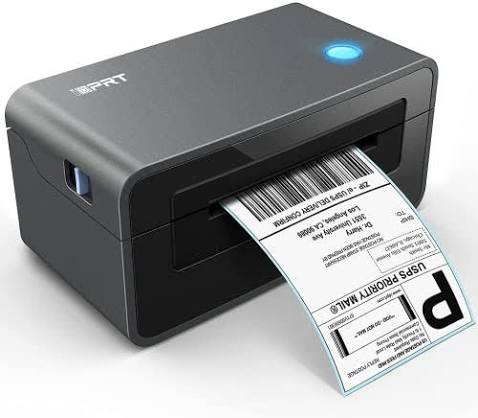
Desktop thermal printers are compact devices designed for everyday printing requirements. They are commonly installed on office desks, retail counters, and small warehouse workstations.
These printers generally support moderate printing volumes and are available in direct thermal and thermal transfer configurations.
Practical Applications
- Small business product labeling
- E-commerce shipping documentation
- Retail price tags and barcode labels
- Office identification labels
- Small warehouse inventory management
Key Advantages
Desktop models offer a practical balance between size, performance, and cost. Their compact design makes them suitable for businesses with limited installation space.
They are particularly useful for organizations that need regular printing without the high production capacity of industrial equipment.
4. Industrial Thermal Printers
<AsyncImage query=”industrial heavy duty thermal barcode label printer manufacturing warehouse” aspectRatio=”16:9″ width=”100%”/>
Industrial thermal printers are designed for demanding environments and high-volume printing operations. They generally feature durable construction, stronger mechanical components, and larger media capacities.
Many industrial models support continuous operation and can handle wider label formats or specialized printing materials.
Practical Applications
- Large-scale warehouse labeling
- Manufacturing product identification
- Distribution center barcode printing
- Pallet and carton labeling
- Industrial asset tracking
Key Advantages
Industrial printers are suitable for businesses that require consistent printing throughout extended working periods. Their robust construction and higher production capacity help support large-scale operations.
They may also offer advanced connectivity and integration options for warehouse management and enterprise resource planning systems.
5. Mobile Thermal Printers
<AsyncImage query=”portable handheld mobile thermal receipt printer delivery worker” aspectRatio=”16:9″ width=”100%”/>
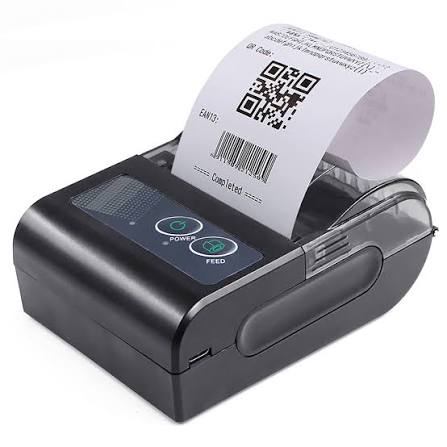
Mobile thermal printers are lightweight devices designed for printing outside traditional office or workstation environments. Many models include rechargeable batteries and wireless connectivity, allowing users to print information through smartphones, tablets, or portable terminals.
Their compact construction supports printing activities in locations where stationary equipment is inconvenient.
Practical Applications
- Delivery receipts and proof-of-delivery documents
- Mobile retail transactions
- Field service documentation
- On-site inventory labeling
- Transportation and ticketing operations
Key Advantages
Portability is the main benefit of mobile thermal printers. Employees can generate receipts and labels while moving between locations without returning to a fixed workstation.
Wireless connectivity also makes it easier to integrate mobile printing into digital business processes.
6. POS Thermal Printers
<AsyncImage query=”point of sale thermal receipt printer checkout counter retail store” aspectRatio=”16:9″ width=”100%”/>
Point-of-sale thermal printers are designed specifically for checkout and transaction environments. They commonly use direct thermal technology to produce receipts quickly.
These printers can connect to cash registers, POS terminals, computers, and compatible retail management systems.
Practical Applications
- Supermarket checkout receipts
- Restaurant billing
- Hotel payment documentation
- Retail transaction records
- Customer service counters
Key Advantages
POS thermal printers prioritize printing speed, reliability, and convenient operation. Their relatively quiet performance makes them appropriate for busy customer-facing environments.
Many models also support automatic paper cutting and multiple connectivity interfaces.
7. Kiosk Thermal Printers
<AsyncImage query=”embedded kiosk thermal printer mechanism self service ticket machine” aspectRatio=”16:9″ width=”100%”/>
Kiosk thermal printers are designed to operate inside self-service machines and automated information systems. Unlike conventional desktop models, they are often built as compact printing mechanisms that can be integrated into larger equipment.
These printers support unattended printing and can be controlled through the software installed in the kiosk.
Practical Applications
- ATM transaction slips
- Self-service check-in documents
- Parking tickets
- Public transportation tickets
- Queue management systems
- Automated payment receipts
Key Advantages
Kiosk printers support automated services by allowing customers to receive printed information without assistance from employees.
Their integration-focused designs help businesses develop self-service systems for public and commercial environments.
8. Color Thermal Printers
<AsyncImage query=”compact color thermal label printer printing full color product labels” aspectRatio=”16:9″ width=”100%”/>
Color thermal printing systems use specialized technologies and compatible media to produce colored graphics and labels. These systems differ from standard monochrome thermal printers, which generally produce black text and images.
Some color thermal technologies use multiple heat-sensitive layers, while other color-label solutions employ specialized printing processes.
Practical Applications
- Product branding and identification
- Retail product labels
- Promotional stickers
- Packaging identification
- Specialty ticketing
Key Advantages
Color printing can improve product presentation and make labels easier to distinguish. It is useful when visual information, branding, or color-coded identification is important.
Businesses should carefully evaluate media availability, printing costs, and technology compatibility before choosing a color thermal solution.
Comparison of Different Types of Thermal Printers
The following table highlights the primary differences between common thermal printer categories.
| Printer Type | Main Purpose | Typical Environment |
|---|---|---|
| Direct thermal | Receipts and temporary labels | Retail and logistics |
| Thermal transfer | Durable product labels | Manufacturing and warehousing |
| Desktop | Moderate daily printing | Offices and small businesses |
| Industrial | High-volume printing | Factories and distribution centers |
| Mobile | Portable receipt and label printing | Delivery and field operations |
| POS | Transaction receipts | Retail and hospitality |
| Kiosk | Automated ticket and receipt printing | Public and self-service facilities |
| Color thermal | Specialized colored labels | Retail and packaging |
It is important to understand that these categories are not always mutually exclusive. For example, a desktop printer can use direct thermal or thermal transfer technology, while an industrial printer may also support both methods.
How to Choose the Right Type of Thermal Printer
Selecting the right thermal printer requires an assessment of business requirements and operating conditions.
1. Identify Your Printing Purpose
Start by determining what the printer will produce. Receipt printing, barcode labeling, product identification, and shipping documentation may require different equipment configurations.
For example, a retail store may need a POS receipt printer, while a warehouse may require a dedicated barcode label printer.
2. Evaluate Printing Volume
Consider the number of receipts or labels required each day. Businesses with occasional printing needs may find desktop models sufficient, whereas large distribution centers may require industrial equipment.
Selecting a printer with suitable capacity can help prevent unnecessary downtime.
3. Select the Appropriate Printing Technology
Direct thermal printing is generally suitable for temporary labels and receipts. Thermal transfer printing is often a better option for applications where labels must remain readable for longer periods.
The choice should also account for environmental conditions and label material requirements.
4. Check Resolution and Printing Speed
Print resolution affects the sharpness of text, graphics, and barcodes. Common options include 203 DPI, 300 DPI, and 600 DPI.
Printing speed should also match the business workload. A suitable balance between speed and resolution helps maintain productivity without sacrificing readability.
5. Consider Connectivity and Compatibility
Check whether the printer supports the required connections, such as USB, Ethernet, Bluetooth, or Wi-Fi.
Software compatibility is equally important. The printer should work with existing POS systems, warehouse applications, computers, or mobile devices.
6. Review Maintenance and Operating Costs
Evaluate the cost of paper, labels, ribbons, replacement parts, and routine maintenance.
A printer with an appropriate design and readily available consumables can help businesses manage long-term operating expenses.
Industries That Benefit Most from Thermal Printing
Thermal printing technology is useful across a variety of commercial sectors.
Retail: Businesses use thermal printers for receipts, price labels, shelf identification, and inventory tracking.
Logistics: Shipping companies rely on thermal printing for package labels, tracking barcodes, and delivery documentation.
Healthcare: Medical facilities use specialized thermal printing systems for patient wristbands, laboratory labels, and pharmacy documentation.
Manufacturing: Production facilities use thermal printers to identify components, track products, and support quality control.
Hospitality: Restaurants and hotels use receipt and kitchen printers to manage transactions and coordinate orders.
Transportation: Airlines, railway operators, and other transportation providers use thermal printing systems for tickets and passenger documentation.
Maintenance Tips for Different Thermal Printer Types
Regular maintenance helps keep thermal printers operating consistently.
- Clean the printhead: Remove dust and residue according to the manufacturer’s cleaning instructions.
- Inspect the platen roller: Check for contamination, damage, or excessive wear that could affect paper movement.
- Use compatible materials: Select paper, labels, and ribbons that meet the printer’s specifications.
- Check sensors: Keep media detection sensors clean to prevent positioning and feeding errors.
- Maintain proper storage conditions: Store labels and ribbons away from excessive heat, moisture, and direct sunlight.
- Follow manufacturer guidelines: Use recommended settings and maintenance procedures to protect internal components.
The maintenance schedule should reflect the printer’s workload and operating environment. Industrial models used continuously may require more frequent inspection than desktop printers used occasionally.
Conclusion
Different types of thermal printers serve different operational requirements, from simple receipt generation to advanced industrial labeling and automated ticket printing. Direct thermal and thermal transfer technologies provide the foundation for many of these devices, while desktop, industrial, mobile, POS, and kiosk designs offer flexibility for different working environments.
Choosing suitable equipment involves evaluating printing volume, application requirements, resolution, connectivity, media compatibility, and long-term maintenance costs. By understanding the capabilities of each printer category, businesses can select an appropriate solution that supports productivity, accurate identification, and efficient daily operations.